
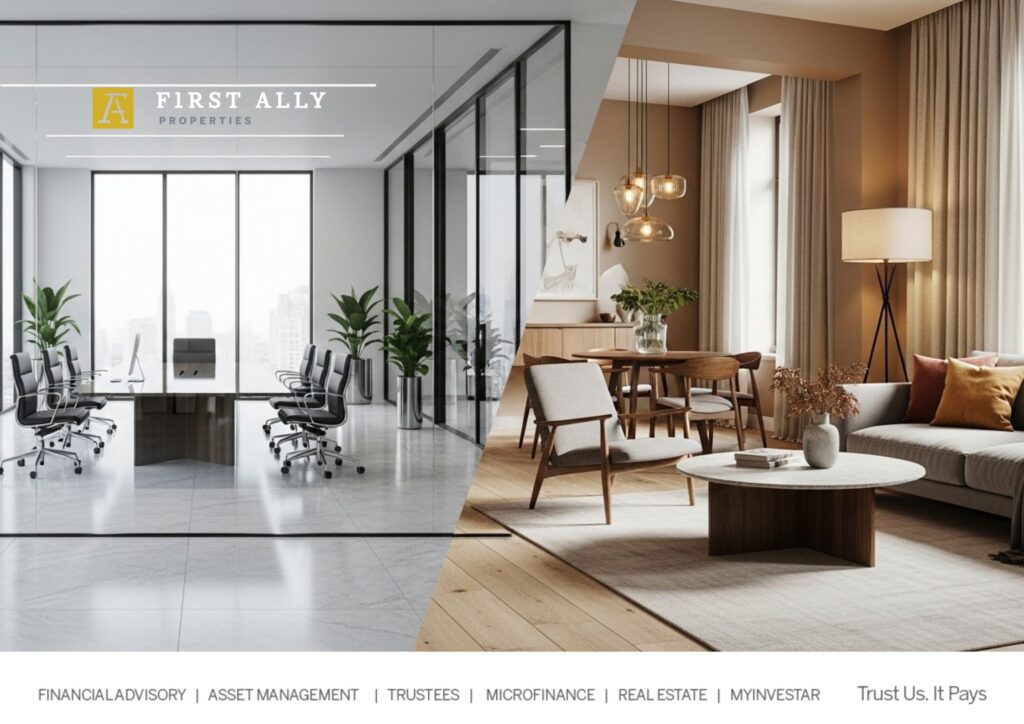
When it comes to property maintenance, most people assume it’s all the same, fix a leak here, repaint a wall there, trim some grass, and you’re good. But anyone who’s managed both an office space and a residential property knows that’s far from the truth.
Office and residential properties may share a few basic maintenance needs, but their priorities, frequency, and even style of upkeep are worlds apart. Whether you’re a landlord, a facility manager, or just curious about what goes into keeping spaces functional and beautiful, here’s how the two differ and why it matters.
1. Purpose Defines the Priorities
Let’s start with the obvious: an office and a home serve completely different purposes.
- Office spaces are productivity zones. The focus is on efficiency, comfort, and safety to keep employees performing at their best. Think HVAC systems that keep everyone cool, reliable power supply, working elevators, clean restrooms, and spotless reception areas.
- Residential properties, on the other hand, are all about comfort and personal satisfaction. Tenants expect everything from well-kept lawns to functional plumbing, good lighting, and a safe environment that feels like home.
In short:
Offices = business continuity.
Homes = daily comfort and liveability.
2. Frequency and Type of Maintenance
Office maintenance is usually preventive and scheduled, while residential upkeep tends to be reactive and personal.
- In offices, maintenance teams follow a strict calendar, monthly A/C servicing, weekly janitorial cleaning, quarterly pest control, and annual safety checks. It’s about minimizing downtime and preventing disruptions during work hours.
- In homes, maintenance often happens when something breaks or wears out. Leaky taps, faulty sockets, or cracked walls get fixed as they appear, sometimes DIY-style or through a quick call to the property manager.
3. Aesthetics and Functionality
Here’s where the line really sharpens.
- Office properties prioritize sleek, modern, and brand-consistent aesthetics, polished floors, glass partitions, neutral tones, and smart lighting. The idea is to impress clients and keep employees inspired.
- Residential spaces reflect personal taste, cozy finishes, warm colours, and homey touches. Maintenance here includes repainting, garden care, pest control, and general upkeep that enhances comfort rather than corporate image.
So, while an office might invest in LED light panels and digital locks, a home invests in curtains, tiles, and a backyard lawn.
Tip: Commercial maintenance often costs more upfront, but it saves money long-term through consistency and fewer major repairs.
4. Utility Management
This one’s a game-changer.
Offices are heavy on utilities, think large-scale generators, central air conditioning systems, water treatment facilities, and sometimes even solar grids. A minor disruption can affect dozens (or hundreds) of people, so redundancy and quick response are crucial.
In residential spaces, the scale is smaller. Maintenance usually covers individual meters, household appliances, and occasional plumbing or electrical repairs. The goal is comfort, not capacity.
5 . Cost and Responsibility
When it comes to bills, the maintenance structure also varies.
- In office buildings, costs are often shared among tenants through service charges or maintenance fees. Property managers or facility teams handle most of the upkeep, ensuring consistency.
- In residential properties, individual tenants or homeowners typically bear maintenance costs. The property manager’s role is more supervisory, ensuring standards are met and issues are resolved quickly.
It’s like comparing a fleet of cars to a single one, managing many at once requires more coordination, documentation, and proactive systems.
6. Health, Safety, and Regulations
Both property types are governed by safety standards, but offices have stricter compliance demands, fire safety systems, access control, and ergonomic designs all play a big role.
Residential properties focus more on security and well-being ensuring clean water, proper waste disposal, and a safe environment for families.
Bottom Line
The difference between office and residential property maintenance boils down to function, frequency, and formality. Offices run on schedules, systems, and standards. Homes thrive on comfort, personalization, and convenience.
Whether you’re managing one or both, the key is consistent upkeep, because neglected maintenance doesn’t just reduce property value, it erodes comfort, productivity, and even trust.
Partner with the Experts — First Ally Properties Has You Covered
At First Ally Properties, we understand that property management isn’t just about fixing what’s broken, it’s about preserving value, enhancing experience, and ensuring peace of mind.
Whether it’s an office complex, a residential estate, or a mixed-use development, our professional team handles everything from maintenance coordination to tenant satisfaction with precision and care.
Ready to take the stress out of property maintenance? Contact First Ally Properties today and let’s help you manage your property like the investment it truly is.